

By W.G. RAMIREZ
Baseball umpires aren't supposed to be the entertainment.
They're supposed to call balls and strikes, maintain order, settle arguments and, ideally, go unnoticed. Their best performances are often the ones nobody remembers.
Vincent Chapman never quite fit that description.
Give him a baseball diamond, a little music, and a chance to make somebody smile, and the man affectionately known as the Dancing Umpire might just steal the show.
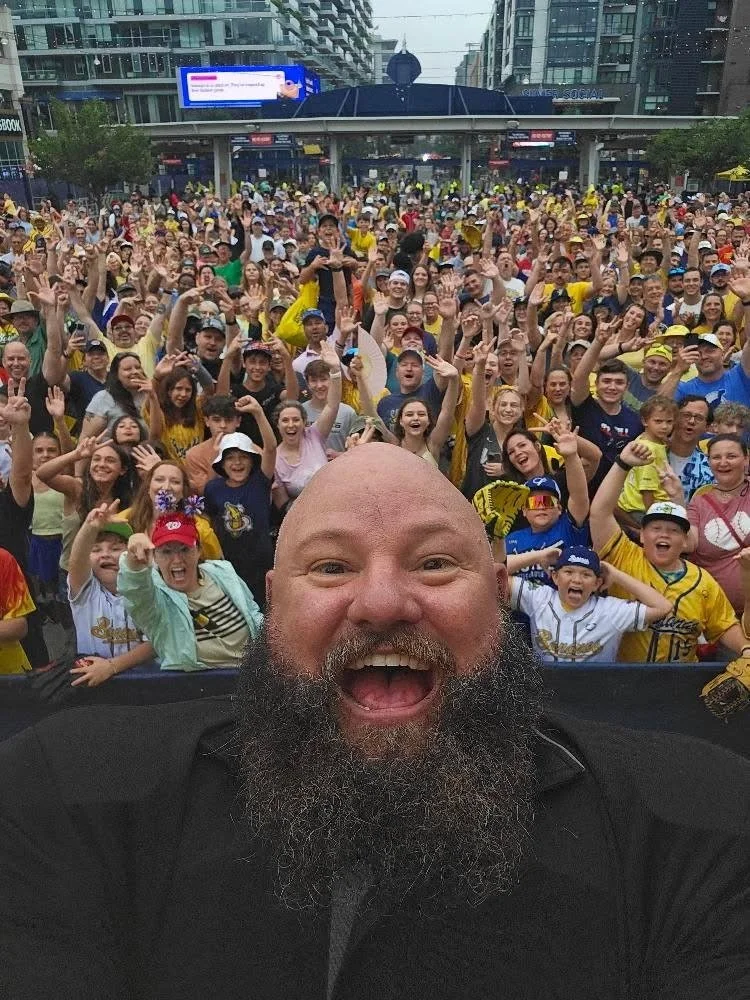
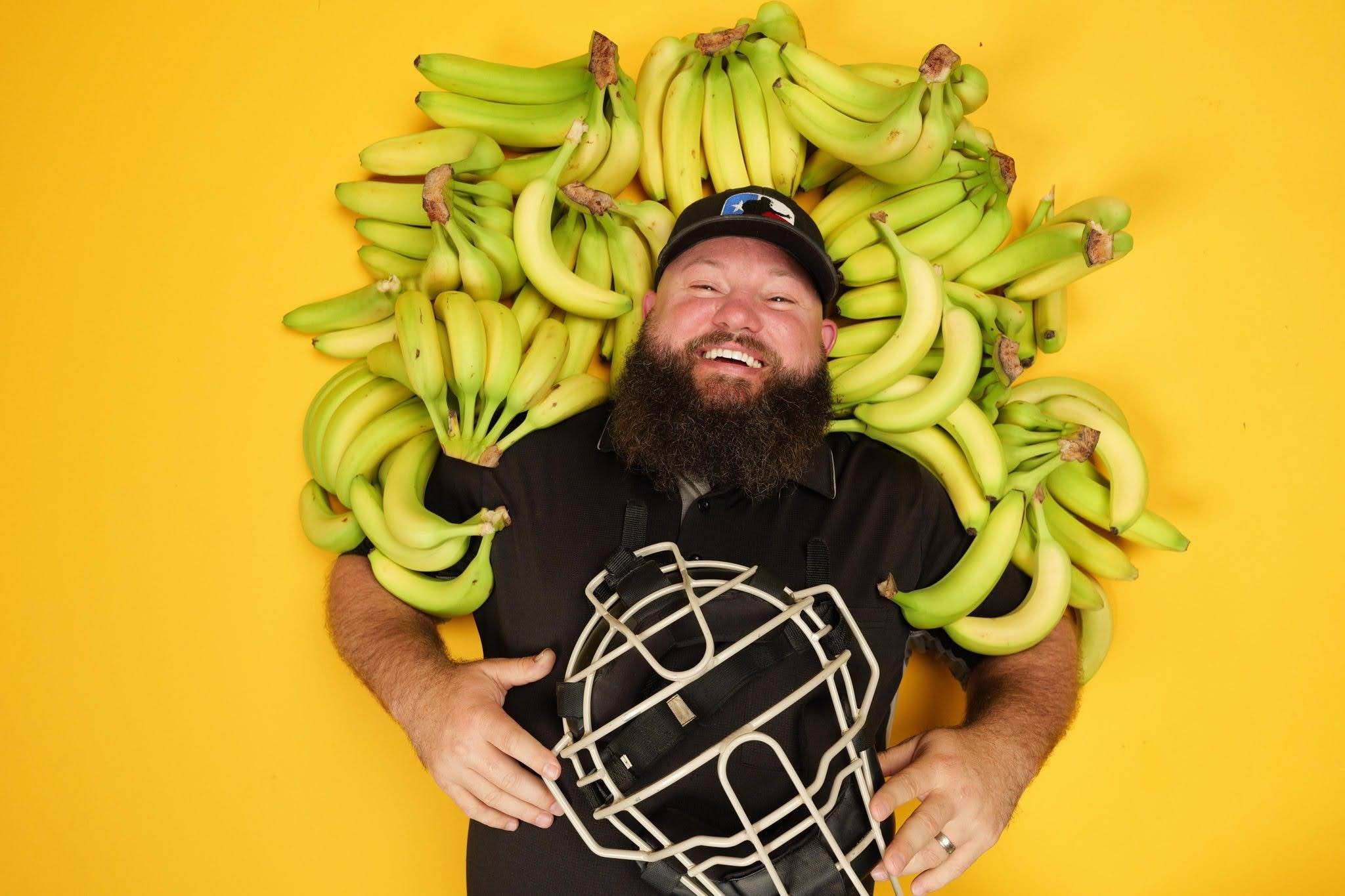
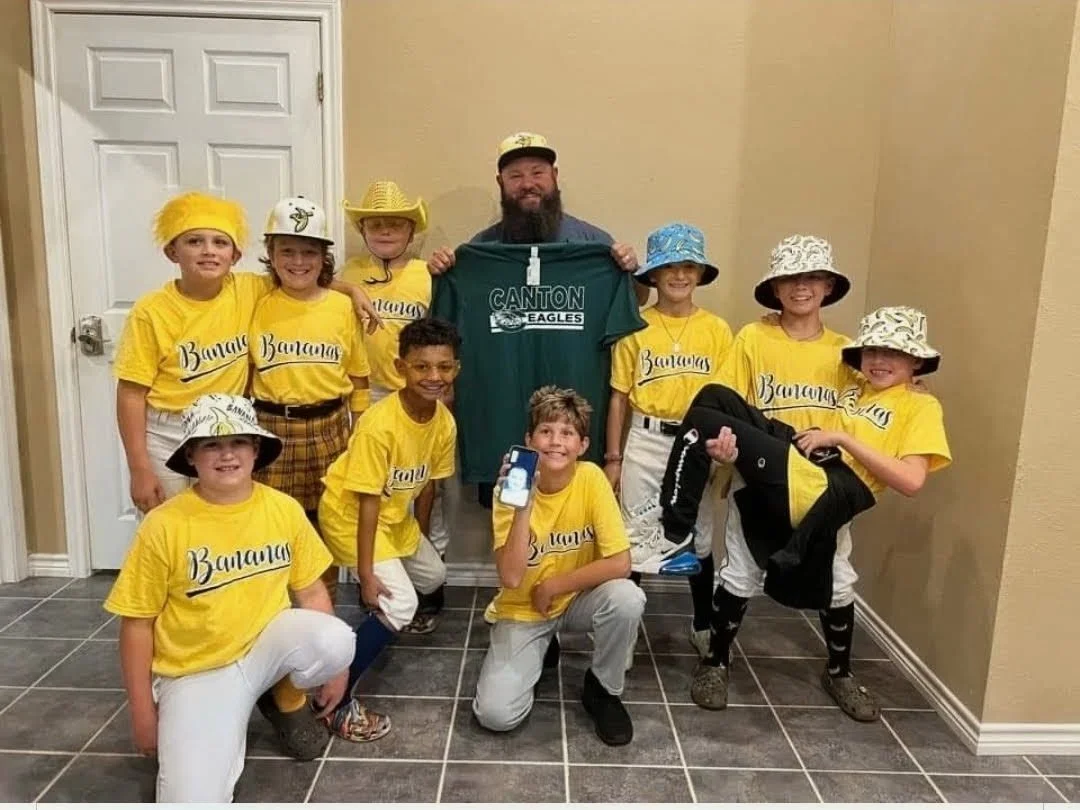
These days, Chapman is one of the recognizable faces of the Savannah Bananas, the wildly popular baseball phenomenon that has turned America's pastime into a traveling celebration of athleticism, entertainment, and unrestrained fun.
But behind the dancing, the laughter and the infectious personality is a man whose journey hasn't always been filled with happiness.
Sometimes, the person making everybody else smile is the one who needs it most.
"Sometimes happiness is a reflection," Chapman said during an exclusive interview with WGRamirez.com. "It reflects your own pain."
It's a revealing admission from someone whose professional identity is built around bringing joy to others.
Chapman knows firsthand what it's like to feel emotional darkness while still entertaining the people around him.

His mother, whom he described as his best friend and greatest supporter, died before he ever joined the Bananas.
Her death sent him into an abyss.
"My mom passed away five years ago, and I was in the darkest ... darkest spot I've ever been in," Chapman said. "You know, she was my best friend. And she didn't get to see me do Banana Ball."
The grief was overwhelming.
Chapman said he began taking antidepressants and struggled with the desire to withdraw from the world.
"I didn't want to get out of bed," he said. "I wanted to stay in bed and just be by myself. I didn't want to be around people, and that's not who I am."
For someone who thrives on human interaction, the isolation was particularly difficult.
But the same passion that had defined him since childhood offered a way to reconnect with the world.
Music. Dancing. People.
And the remarkable exchange of happiness that happens when one person makes another smile.
"When you make someone's day and you see them light up, it lights you up too," Chapman said.
It might be the simplest explanation for a career that's anything but ordinary.
Chapman didn't invent the Dancing Umpire to become famous.
It's who he has always been.
"No, no, this is who I am," he said. "I've been the Dancing Umpire since 2008. I consider the Dancing Umpire is just a title.
"It's me. I'm Vincent Chapman. The Dancing Umpire is just my job title."
And understanding the man behind that title means going back long before the Savannah Bananas ever came calling.
A Mother’s Love, A Childhood’s Lessons
Before the packed stadiums, viral videos and national recognition, there was a little boy who loved to dance.
Chapman remembers being the only student on the dance floor at a fifth-grade gathering while his friends congregated around the punch bowl or sat along the sidelines.
He wasn't embarrassed.
He was having the time of his life.
"I've just always loved to dance," he said. "It brings me happiness."
But childhood wasn't easy.
Chapman remembers being teased about his weight and appearance. Other children called him "Sumo," a nickname that reflected the kind of cruelty children sometimes inflict without understanding its lasting impact.
His biological father left when Chapman was 3, and they didn't establish a relationship until he was a junior in high school.
His stepfather was present but, Chapman recalled, wasn't much of a father figure.
That left his mother carrying much of the responsibility for raising him.
She worked at convenience stores, Walmart and a pharmacy, finding ways to provide the things her son wanted despite limited financial resources.
Whether it was a Chicago Cubs shirt or a pair of Sean Kemp basketball shoes, she somehow made it happen.
Only after becoming a father himself did Chapman fully appreciate the sacrifices she made.
"She wasn't rich," he said. "She wasn't working a corporate job."
Yet she found a way.
And when life disappointed him, she offered something more valuable than material possessions.
Encouragement.
"She was my number one cheerleader," Chapman said. "She had my back."
He remembers her reassuring him after disappointing performances in school or sports.
"Baby, it's okay," she'd tell him. "It's okay to mess up. It's okay to fail. Like, that doesn't define you."
Another important influence came from a football coach named Dewaski Davis.
Chapman, who had grown into one of the tallest children in his grade, found confidence through athletics. Davis taught him discipline, encouraged him academically and became the first significant male role model in his life.
Remarkably, Chapman had seen Davis at his nephew's football game the night before this interview.
The encounter brought those childhood lessons back into focus.
"He was one of the first men that I ever looked up to," Chapman said.
Those influences helped shape a young man who refused to let others' opinions define him.
Chapman said he moved comfortably among different social circles in high school, befriending athletes, musicians, artists and classmates who didn't participate in extracurricular activities.
He was elected homecoming king and voted most popular.
But he believes popularity came from something more meaningful than social status.
He simply liked people.
That philosophy eventually followed him onto the baseball diamond.
After years of umpiring youth baseball, Chapman grew increasingly bothered by the pressure adults placed on children.
Adults criticized young players for mistakes that were simply part of learning the game.
"They're all getting yelled at," Chapman said. "These kids are doing their best. Like, they're trying their best. They don't miss the ball on purpose. They didn't strike out on purpose."
Then came an ordinary moment that changed his life.
During an inning break, a mother played music through a speaker attached to a cooler.
Chapman started dancing.
The children laughed, pointed and began having fun.
A personality that had always existed suddenly found a purpose.
Not everyone approved.
Other umpires criticized his performances, accusing him of making a mockery of baseball. Even a close friend suggested he stop dancing because it didn't reflect well on the organization.
Chapman refused.
"I wasn't doing it for me," he said. "I was doing it for the kids."
When The World Finally Caught Up
The Savannah Bananas didn't create the Dancing Umpire.
Vincent Chapman created him.
For years, he kept doing what he loved, never imagining it might one day become his full-time profession.
He wasn't chasing fame. He wasn't waiting for a television producer to discover him. He wasn't dreaming of a career in Banana Ball because, when he began dancing in 2008, the concept didn't exist.
Even after his performances drew attention on social media, Chapman wasn't focused on finding a bigger audience.
Then, in December 2021, an unexpected Facebook message arrived.
Someone from the Savannah Bananas asked whether he still umpired and danced.
Chapman initially wondered whether the message was legitimate.
His son had introduced him to the Bananas' unconventional style of baseball just two weeks earlier.
Suddenly, the organization was reaching out to him.
"It was mind-blowing," Chapman said. "When I get that call, or the text message on Facebook asking if I was interested, if I still danced and still umpired, I was blown away."
When his son returned home from school, Chapman showed him the message.
His son's jaw dropped.
By February, Chapman was in Savannah.
He expected an audition. Instead, he found himself among the players and another umpire preparing for an opportunity that would change his professional life.
Looking back, Chapman sees an almost perfect fit between his personality and the organization's philosophy.
"I know where I belong," he said. "Banana Ball is where I belong. The job was made for me."
But the transition wasn't as glamorous as the packed stadiums and highlight videos might suggest.
For his first three years with the Bananas, Chapman continued working for an information technology company.
His schedule became exhausting.
He often spent days away from baseball working his regular job. Travel consumed whatever free time remained.
He sometimes returned home during his lunch break just to nap.
"I didn't have days off," Chapman said. "The days off I had were either a traveling day or working the IT job for three years straight."
Even today, performing with the Bananas involves considerably more than dancing during games.
Chapman described game days lasting 12 or 13 hours, with performers arriving late in the morning and sometimes remaining at the stadium until midnight.
Autograph sessions, fan interactions and other responsibilities are essential parts of the organization's entertainment philosophy.
But Chapman embraces that responsibility.
He understands something that goes beyond baseball.
"Everybody wants to be seen and heard," he said. "And I think that's why we're so successful. That's what we do."
The experience has also taught him when to step away.
Being constantly accessible, even for someone who genuinely loves people, can become emotionally exhausting.
Chapman said he occasionally experiences burnout and needs quiet time alone in a hotel room after games.
"Being on all the time, it does take a mental toll on you," he said.
Sometimes, he needs to turn off his phone, clear his mind and recharge.
Yet the enthusiasm remains genuine.
He hasn't become the Dancing Umpire because somebody told him to perform.
He's the Dancing Umpire because he cannot imagine being anybody else.
The Legacy Of Making Someone Smile
Perhaps the most meaningful measure of Chapman's success has nothing to do with attendance figures, viral videos or the number of people who recognize him.
It comes from the strangers who tell him that his performances have made a difference in their lives.
Recently, a man from Canada entered one of Chapman's livestreams and asked to speak with him.
Chapman couldn't see the man, only hear his voice.
What followed was an unexpected emotional exchange.
The stranger explained that Chapman's videos and personality had helped him through some extremely difficult moments.
He suggested Chapman had helped him stay alive.
Chapman was careful not to exaggerate the encounter's significance or claim responsibility for another person's survival.
But the message stayed with him.
"It's humbling to know that somebody's out there I could possibly have ... helped them in a dark, dark place," he said.
It's an extraordinary thought for a man whose signature act involves dancing between innings at baseball games.
And perhaps that's what makes his story so compelling.
Chapman doesn't consider himself a professional dancer.
He hasn't spent years studying choreography. He doesn't pretend to possess the technical skills of a television dance competition contestant.
He's simply a grown man who loves music, loves baseball and loves making people laugh.
But those simple pleasures can extend far beyond the ballpark.
More Than A Dance, More Than A Game
His own life has taught him that happiness and hardship often coexist.
He's endured divorce, the emotional difficulty of living apart from his young children, the death of his mother and the challenges of maintaining his mental health.
He's also made mistakes.
Chapman recalled a 2023 Banana Ball game in Tulsa when a confrontation with player Eric Jones escalated after Chapman called him out at home plate.
Jones put his hands on Chapman, who responded by shoving him.
Chapman considers the incident the lowest moment of his umpiring career.
He believes he should have ejected Jones and walked away.
Instead, he reacted emotionally, something he still regrets.
The two have since repaired their relationship.
The episode serves as a reminder that even someone known for spreading happiness remains human, imperfect and capable of learning from difficult experiences.
And those experiences have shaped how Chapman wants to be remembered.
He doesn't measure his legacy by fame.
He doesn't want people to remember only the dances, the laughter or the enormous crowds.
He wants them to remember how he treated them.
"I hope they remember how good of a person I was, how I made them feel," Chapman said. "I hope they say I was the nicest person they ever met."
Success, he insists, won't change that.
"I'll never change who I am," he said. "I don't care how much money I make, what my stardom brings. I'll remember where I come from, and I will be humble until the day I die."
Somewhere in those words is the influence of a mother who worked multiple jobs to give her son a better life, a coach who taught him confidence and a little boy who danced while everybody else stood along the wall.
That little boy couldn't have imagined the Savannah Bananas.
He couldn't have anticipated the sold-out stadiums, the national attention or the strangers who would someday tell him his dancing helped them through their darkest moments.
He simply knew that music made him happy.
Years later, after personal heartbreak, unexpected success and a career that defies baseball convention, Vincent Chapman continues to share that happiness with the world.
His mother never got to see him become one of Banana Ball's most recognizable personalities.
But the kindness she encouraged, the resilience she helped develop and the love she gave him remain woven into the man behind the mask.
And perhaps that's the most beautiful part of his story.
The Dancing Umpire might be remembered for the way he moves.
Vincent Chapman hopes people will remember him for how he made them feel.
