
WNBA Finals: Reese’s Historic Response Gives Atlanta Homecourt Edge
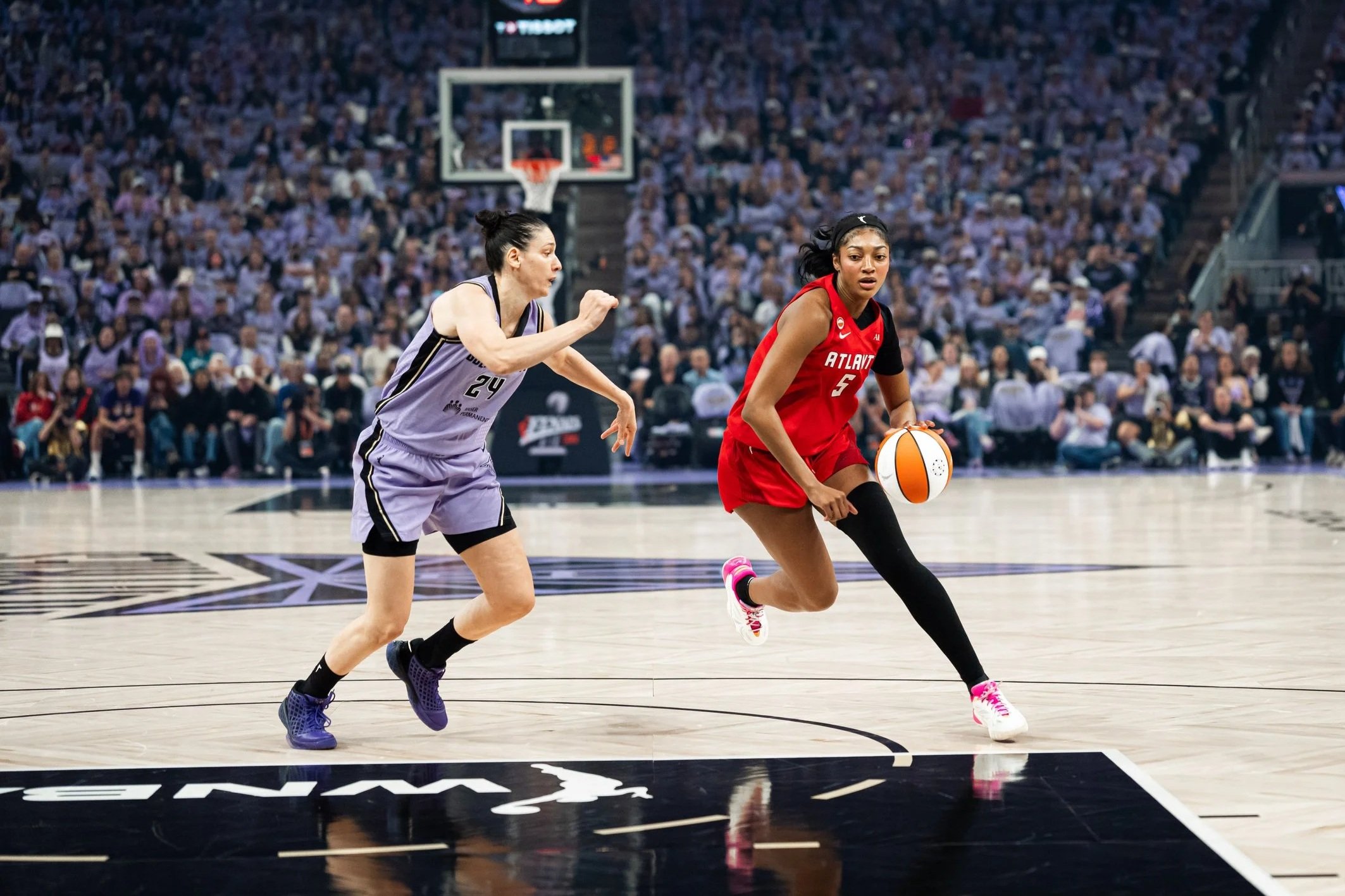
Atlanta Dream star Angel Reese (5) finished with 30 points and 16 rebounds in Monday’s 79-65 win over Golden State. PHOTO: Courtesy Atlanta Dream
By W.G. RAMIREZ
Angel Reese turned Atlanta’s first WNBA Finals victory into a statement about how difficult the Dream will be to beat.
With 30 points and 16 rebounds in Monday’s 79-65 win over Golden State, Reese tied the best-of-seven series at 1-1 and became the youngest player to score at least 30 points and grab 15 rebounds in a WNBA postseason game.
The company underscores the achievement: Jonquel Jones, Lisa Leslie, Candace Parker, Breanna Stewart and A’ja Wilson are the only other players to reach those marks.
For Atlanta, the immediate significance was just as substantial. After Golden State contained Reese following her explosive opening quarter in Saturday’s 68-64 loss, she responded by shooting 10 of 16 in Game 2.
“I let my team down last game, not really contributing as much as I could in the second half,” Reese said. “I wanted to make sure that I came out tonight and left my mark and do what I could to win, and I think I did that tonight.”
That performance shifted the burden of adjustment to the Valkyries. They must limit her interior opportunities, finish defensive possessions and decide how much help they can provide without freeing Atlanta’s perimeter players.
“She was fantastic on both ends of the floor; just a superior performance,” Dream coach Karl Smesko said.
Reese supplied the production and the response. Now Golden State must produce an answer as the series moves to Atlanta.
Here are four additional takeaways after the first two games of the WNBA Finals:
Golden State needs another dependable scoring option
Gabby Williams carried Golden State through the opener with 26 points, including 16 in the second quarter. She was the Valkyries’ only double-figure scorer, an imbalance their defense and supporting cast helped overcome.
Game 2 exposed the vulnerability in that arrangement. Williams finished with 14 points on 3-for-15 shooting, and Golden State struggled to withstand Atlanta’s second-half surge. The Valkyries shot 34.4% after making just 32.1% of their Game 1 attempts.
Their defense can keep difficult shooting nights competitive. Winning this series, however, requires others to punish the attention Williams attracts. More decisive cuts, stronger screening and additional paint touches could ease her workload while creating better opportunities for everyone else.
Rhyne Howard’s record reflects Atlanta’s disruptive defense
Rhyne Howard’s six steals Monday established a WNBA Finals single-game record and illustrated how Atlanta can manufacture offense against Golden State’s demanding defense.
The Dream scored 24 points off turnovers and led 19-0 in fast-break points, attacking before the Valkyries could organize their coverage.
Golden State coach Natalie Nakase identified Atlanta’s positioning as a problem.
“I thought they were out hustling us to get to those spots,” Nakase said. “So we just have to make sure we stay composed. If we can't punch first, stay composed and get back to our spacing.”
That makes spacing and patience essential adjustments. Golden State must stop allowing Atlanta’s pressure to dictate its passing decisions.
Kiah Stokes’ historic rim protection remains essential
Reese’s production should not obscure what Kiah Stokes has provided Golden State defensively.
Stokes joined Brittney Griner, who did it in 2014, as the only players in WNBA history to record at least four blocks in consecutive Finals games. Stokes added 11 rebounds and four blocks Monday, continuing to protect the basket even as Atlanta seized control.
The distinction illustrates both her value and the limits of relying on one defender. Blocked shots cannot compensate for every turnover, missed boxout or breakdown before the ball reaches the paint.
Golden State needs to support Stokes by containing penetration and securing rebounds. Her rim protection remains a foundation, but the Valkyries must complete the possessions she helps disrupt.
Jordin Canada gives Atlanta another way to control games
Jordin Canada supplied both the organization behind Atlanta’s response and an explanation for the energy driving it.
Canada finished Game 2 with 13 points, 10 assists, and seven rebounds, giving the Dream another player who can control possessions.
“We feed off her energy,” Canada said of Reese. “She was talking to us the whole game, keeping us confident.”
That connection becomes increasingly important as Golden State adjusts its interior coverage. Canada must recognize when additional defenders commit to Reese and deliver the ball before the Valkyries recover.
Her ability to turn Reese’s presence into opportunities for others gives Atlanta a sustainable offensive approach as it returns home with the series even.
