
Surviving Depression, Devastating Injury and the Road to Recovery
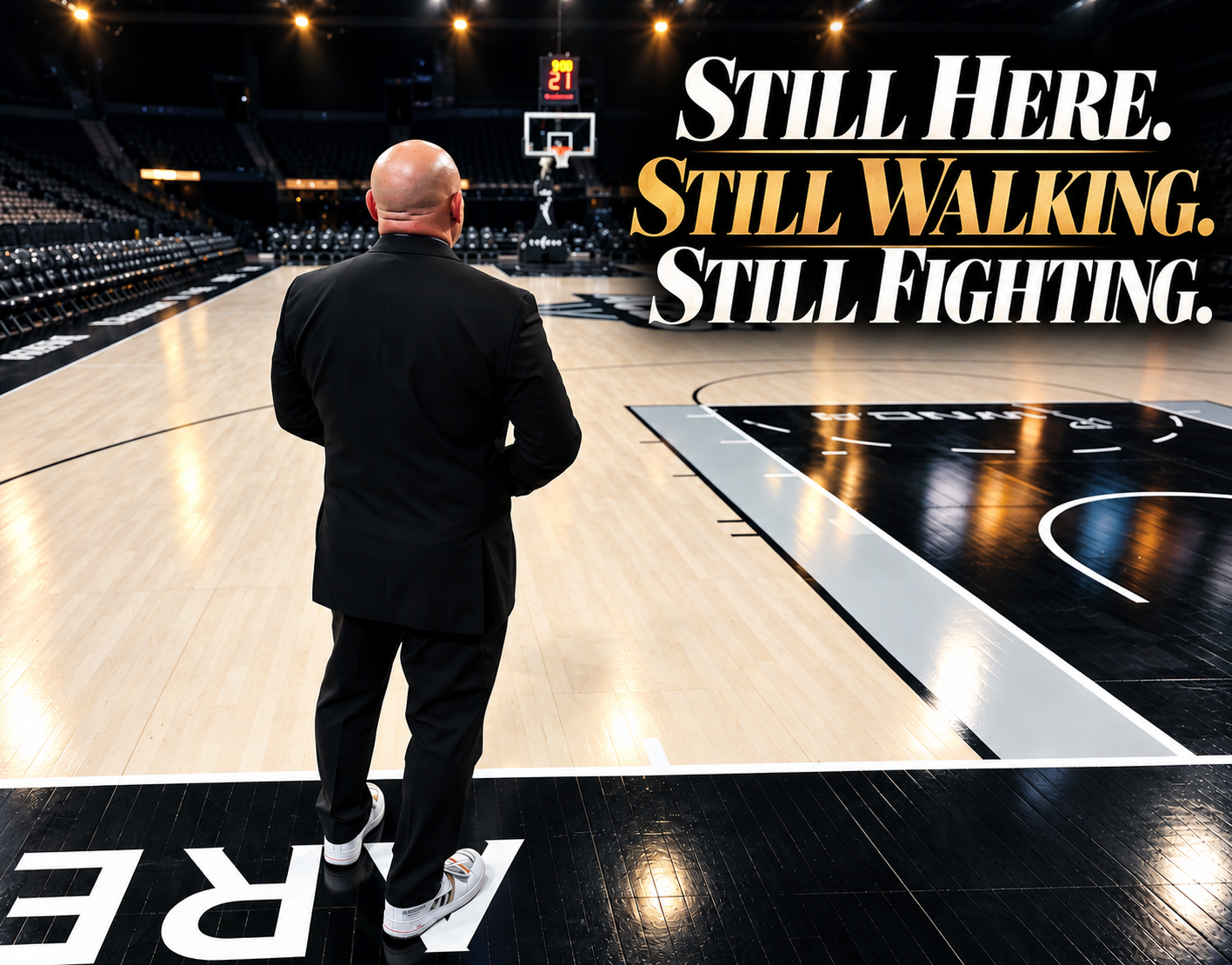
PHOTO: Ethan Miller
By W.G. RAMIREZ
There is something cruel about believing you’ve learned how to live with depression, only to discover how quickly life can test everything you’ve learned.
I’ve written about depression, suicidal ideation and moments when I wasn’t sure whether I wanted to leave Las Vegas or leave life altogether.
I call it cerebral health. The brain is part of the body, and depression isn’t a switch you flip off. You don’t conquer it once and collect a lifetime exemption. It can return without warning. What changes is how you recognize it, respond to it and fight through it.
Before last December, I was doing fine. I wasn’t quietly unraveling. I was living my life.
Then the medical problems began stacking up. And on March 30, the bottom fell out.
When Everything Started Falling Apart
December brought an emergency-room visit for stomach problems.
January brought COVID.
On Super Bowl Sunday in February, my lungs sent me to a quick-care CareNow facility. Later that afternoon, I was involved in a three-car accident. My vehicle took the worst of it. As did my neck and back
I got through those episodes without a mental collapse. They were the beginning of a brutal medical stretch, not the beginning of my depression returning.
That changed March 30.
My quadriceps tendon tore away from my kneecap. Think about that: the mechanism that lets you straighten your leg had failed. My lower leg hung helplessly, and I couldn't make it do what I'd spent a lifetime taking for granted.
Walking. Standing. Showering. Getting to the bathroom. Driving.
Suddenly, none of those things was simple.
A young woman, Kelsea, who had grown into someone like a daughter to me, rushed to the emergency room that morning. She saw me frightened and vulnerable, with my leg hanging uselessly because the tendon that should have anchored it had torn loose.
She showed up when I desperately needed someone. That image — and her presence — will stay with me.
Then came another blow. Within weeks, I lost a job I’d held for 25 years, one of the biggest sources of income in my freelance business. About a week later, I underwent surgery.
Scalpel - STAT!
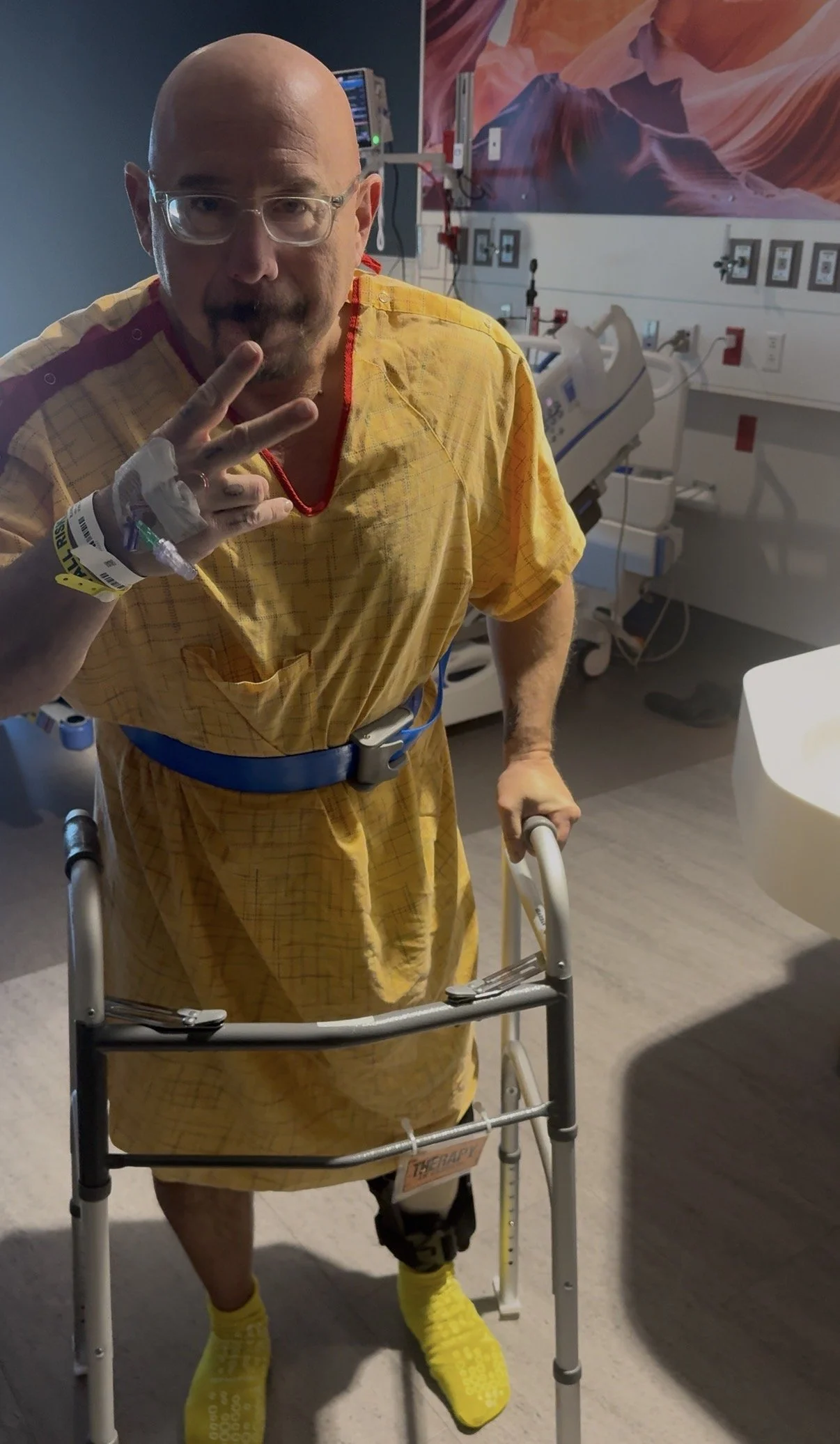
The same afternoon I had surgery to reattach my quad tendon, I was doing physical therapy, walking up and down a staircase.
My surgeon, Dr. Adam Eudy, didn't exactly sugarcoat the situation moments before the anesthesia kicked in.
He told me I would have been better off tearing my ACL, MCL or PCL. Hell, maybe all three.
Then, almost in the same breath, he assured me he'd use the most up-to-date surgical procedure available to repair the damage.
The plan involved drilling holes from the top of my kneecap, through the bone, and out the bottom so he could reattach my quadriceps tendon.
And when he was done, he expected me to be walking by the end of the year.
The end of the year?!
Sheesh.
Did I have a choice?
But beneath my disbelief was something I desperately needed then: confidence in the person who put my leg back together.
Today, as I keep walking and rebuilding my life, I owe Eudy and his surgical team more gratitude than I could ever adequately express. Their skill, care and commitment gave me an opportunity to reclaim something I had spent my entire life taking for granted.
My leg was broken down. My livelihood had taken a hit. And for the first time in this ordeal, my cerebral health began to buckle.
Zero Degrees: When The Thoughts Returned
For roughly 10 weeks, my leg was essentially locked at zero degrees.
Try living with a leg that won’t bend. I was taking what we used to call “ghetto baths.” A sink and a cloth were all I had for hygiene. For weeks.
Eventually, showering, getting into a car, or carrying anything became a chore as my independence disappeared overnight.
I watched muscle vanish from my injured leg. I watched the work I’d put into the gym disappear from the rest of my body.
Physical therapy eventually turned tiny movements into major victories: a little more bend, a leg lift, a steadier step.
But the biggest fear wasn’t simply whether I’d walk normally again.
It was how I would function from day to day, get back into the workforce and pay my bills after losing a major job. Rehabilitation doesn’t stop the rent from coming due.
I had spent years building a career, a body I felt good about and a community on TikTok. Suddenly, I couldn’t count on the simplest routines.
I wasn’t just learning to move again. I was trying to figure out how to keep my life moving.
This is the part I won’t sanitize.
During the first week after my injury, intrusive thoughts about suicide returned.
I didn’t know how long recovery would take, whether I could work or what my life would look like when the next sports season arrived. The uncertainty became overwhelming.
And a frightening thought took hold: If I can’t get through this, I don’t want to be here.
Depression hadn’t been building through December, January and February. The mental collapse began after that March injury, when I suddenly couldn’t see a way through what lay ahead.
Experience with depression didn’t make me immune. It did help me recognize the danger.
I reached out to someone I trusted — an executive with a Las Vegas professional sports organization — and sent a voice text. I was struggling to imagine what came next, and I needed that person to know.
That decision came from a combination of instinct, experience and lessons learned in earlier battles.
I didn’t have a perfect plan. I reached for another human being.
Sometimes that is where survival begins.
The Call That Mattered
The injury happened on a Monday. By Friday, that executive called.
What could have been a quick check-in became nearly an hour of listening and talking. At a moment when my thoughts had taken me somewhere dangerous, the conversation helped pull me back.
I’m deliberately protecting that person’s identity. The gesture matters more than the name.
Once I was cleared to return to covering sporting events, including the Stanley Cup Final and the beginning of the WNBA season, my first phone call wasn't to an editor.
It was to my tailor.
If I was going to return to press boxes, arenas and locker rooms wearing a cumbersome leg brace, I was damn sure going to look like myself doing it.
I had custom pants made to accommodate the brace without sacrificing the professional way I'd always presented myself. It might sound vain, but after losing so much control over my body and my life, being able to dress the way I wanted meant reclaiming a little piece of who I was.
And returning to those familiar surroundings brought something I hadn't anticipated: genuine concern and encouragement from the athletes I'd spent years covering. They saw the brace, asked what happened and offered words that meant considerably more than they probably realized.
Golden Knights star Jack Eichel shared five minutes privately after a 5-3 win over the Colorado Avalanche in Game 3 of the Western Conference Final.
Aces star NaLyssa Smith spent time during training camp expressing concern while also offering encouragement.
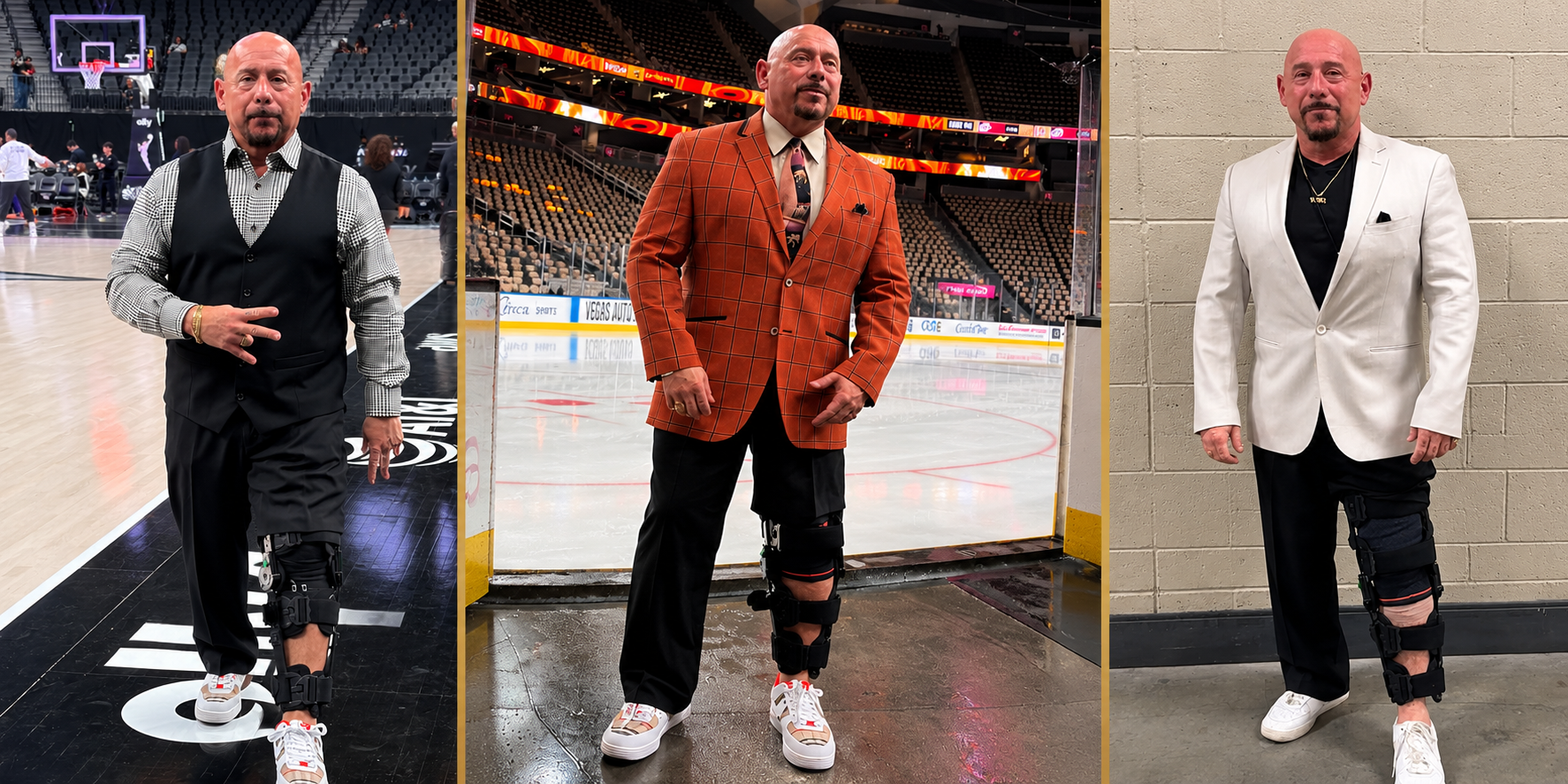
A torn quadriceps tendon and a cumbersome leg brace wouldn't keep me away from the arenas and locker rooms I called a second home. With custom-tailored clothing and determination, he returned to covering professional sports while continuing his recovery.
Before their home opener, five-time MVP A’ja Wilson got a kick out of my one-legged pants when I joked that the tailoring was in honor of her trademark one-legged compression.
During visits to Las Vegas, Kelsey Plum, Cameron Brink, Rae Burrell and Sophie Cunningham were among the WNBA stars who shared compassion.
Ryan Reaves and William Karlsson also wished me well at the Golden Knights and Raiders’ annual charity softball game.
Some interactions were brief. Others meant more than the people involved may ever know.
Like the text I received from Houston Texans tight end Brevin Jordan, whom I covered at Bishop Gorman. When I wondered what God’s plan was, he sent a thoughtful, meaningful reply that renewed my faith.
I’ve spent much of my life around athletes, arenas and locker rooms. This time, the story wasn’t about their performances.
It was about people recognizing someone was hurting.
Sometimes you don’t realize how many people care until you’re struggling to find a reason to care about yourself.
And some of the people who made the greatest difference weren’t anywhere near an arena.
Loyalty Is Who Shows Up
My son was among the people who were there for me. So was Kelsea, who kept checking in and helping after standing beside me in that emergency room.
Longtime friends KC, Lee, and Jeff also proved why their friendships mattered. When I couldn’t drive, they got me to appointments, sometimes on short notice. They did more than text to ask how I was doing.
I’ll never forget that.
I'll also remember how one simple text message checking on me turned into an unexpected $500 Zelle payment to help cover my mounting bills. No questions asked. Just someone who cared enough to help.
But I won’t forget the other side, either.
People I’d known for 10, 20 or 30 years knew what I was facing. Some never checked in. Others seemed to disappear whenever I might need a favor. I can’t know their reasons. I know what their absence felt like.
Some said, “If you need anything,” in one breath, but later said they “would help had I lived closer.”
Meanwhile, one young lady, Isamar, whom I had barely known through TikTok, came to my home to clean and do laundry. I couldn’t carry a laundry basket up and down the stairs. She could, and did.
No grand speeches. Just help.
That’s the kind of thing you remember when you’re back on your feet.
Friendship Doesn’t Require Proximity
TikTok wasn’t all kindness. There was drama, toxicity and the usual nonsense that can make social media exhausting.
But there were also Boots, MyMy, Chase, Azzie, Molz, Millsy, Meesh, Buck, Burrito and Ace.
Names on a screen became real friends. Some lived thousands of miles away, most even further, across the pond in the United Kingdom.
They checked on me. They listened. They made me laugh when I desperately needed a reason.
Some people who have never sat in the same room with me invested more time in my well-being than people who lived minutes away.
Think about that.
I’m not dismissing the longtime friends who came through. Their loyalty deserves recognition. I’m saying that history alone doesn’t make someone loyal, and distance doesn’t make someone absent.
You can live around the corner and disappear. You can live across an ocean and find a way to be there.
That isn’t bitterness. It’s perspective.
I used to think years of history were what made friendships meaningful. This year taught me to look harder at what people actually do.
Loyalty isn’t a matter of geography, blood or how long someone has been in your phone.
It’s who shows up when life knocks you on your ass.
Walking Isn’t The Same As Healing
Today, I can walk.
Some days, that sentence didn’t feel guaranteed.
I’m working, rebuilding and getting stronger. And I owe much of that progress to Cassandra, my physical therapist, whose work primarily focuses on senior citizens but who took me on as a patient and became an essential part of my recovery.
What began as physical therapy became something much more personal. Cassandra became someone I trusted with every concern, every setback and every small victory. She understood that rebuilding my confidence mattered as much as rebuilding the strength in my leg. When I doubted my progress, she helped me recognize it.
I remember sitting on a recumbent bike, struggling to complete even one full pedal revolution. My knee simply wouldn't bend far enough.
But Cassandra wouldn't let me settle for that.
She gave me homework between sessions, challenged me to push a little farther each time and eventually set a deadline. She wanted one complete revolution by a specific date.
Suddenly, something most people accomplish without a second thought became a personal mission.
I didn't want to disappoint her. At that point in my rehabilitation, she was the one person I counted on to guide me through the physical recovery, and her confidence in me meant more than she probably realized.
It wasn't just about getting that pedal all the way around.
It was about proving to both of us that I was moving forward.
I’m back in the gym, though nowhere near where I was before the injury. I’m also trying not to measure every day against a version of myself that no longer exists.
And I’m still learning to protect my cerebral health.
There are professional pressures, financial concerns and difficult personalities to navigate. The medical bills have become overwhelming, even after insurance, adding another layer of anxiety to a recovery that has already taken so much from me.
I've since found another media vendor, but the maximum they're willing to pay doesn't come close to the monthly invoices I once submitted after 25 years with the previous one.
Still, I won't bite the hand that feeds me, even when accepting that hand comes at a considerable financial price.
When Authority Becomes Toxic
And then there's the toxicity that can exist in any workplace, where certain personalities mistake professional authority for permission to speak to people however they damn well please.
As a freelancer, you encounter that mentality with far too many media vendors. Your personal struggles, physical limitations or emotional well-being become irrelevant. All that matters is whether your postgame story is filed the moment the game-winning touchdown is scored.
Deadlines matter. I understand that better than most. But somewhere along the way, basic human decency shouldn't become collateral damage.
I've encountered people who seem to believe that holding professional leverage means their words are beyond question. They think there can be no retort, no disagreement, not even a little good-natured banter, without someone interpreting it as a challenge to their authority.
Power can expose insecurity just as easily as it can demonstrate leadership.
And when you're already battling physical limitations, financial uncertainty and the demons inside your own head, the last thing you need is someone else's dysfunction becoming another burden you're expected to carry.
I've learned that protecting my cerebral health sometimes means refusing to absorb another person's behavior as evidence that something is wrong with me.
I can be accountable without being submissive. I can acknowledge my mistakes without accepting disrespect. I can disagree without being disloyal. And I can protect my livelihood without surrendering my dignity.
That's a balance I'm still learning.
None of that gets easier just because my leg works again.
Scars lie beneath my custom-tailored suits. And others nobody can see, rooted deep in my genetic code, remind me that some of the battles I fight aren't visible to the people standing right in front of me.
Recovery has required me to accept help, set boundaries and recognize when the old darkness starts talking.
It has also taught me that strength sometimes looks less like lifting a weight and more like sending a message that says you need somebody.
This Isn’t A Comeback Story - Yet!
I’ve covered sports long enough to know I can't manufacture the perfect ending.
This isn’t the column where the injured player runs triumphantly onto the field while inspirational music plays.
I’m not there.
I’m walking, but still rehabilitating. Working, but still rebuilding. I'm laughing again, but I'm not pretending every day is easy.
And recently, when the WNBA finalist Atlanta Dream came to Las Vegas, I experienced something I hadn't felt in months.
I felt like my old self.
There I was, back in my element, wearing a proper pair of custom-tailored pants — no cumbersome brace dictating my wardrobe — sharing laughter with Allisha Gray and Jordin Canada.
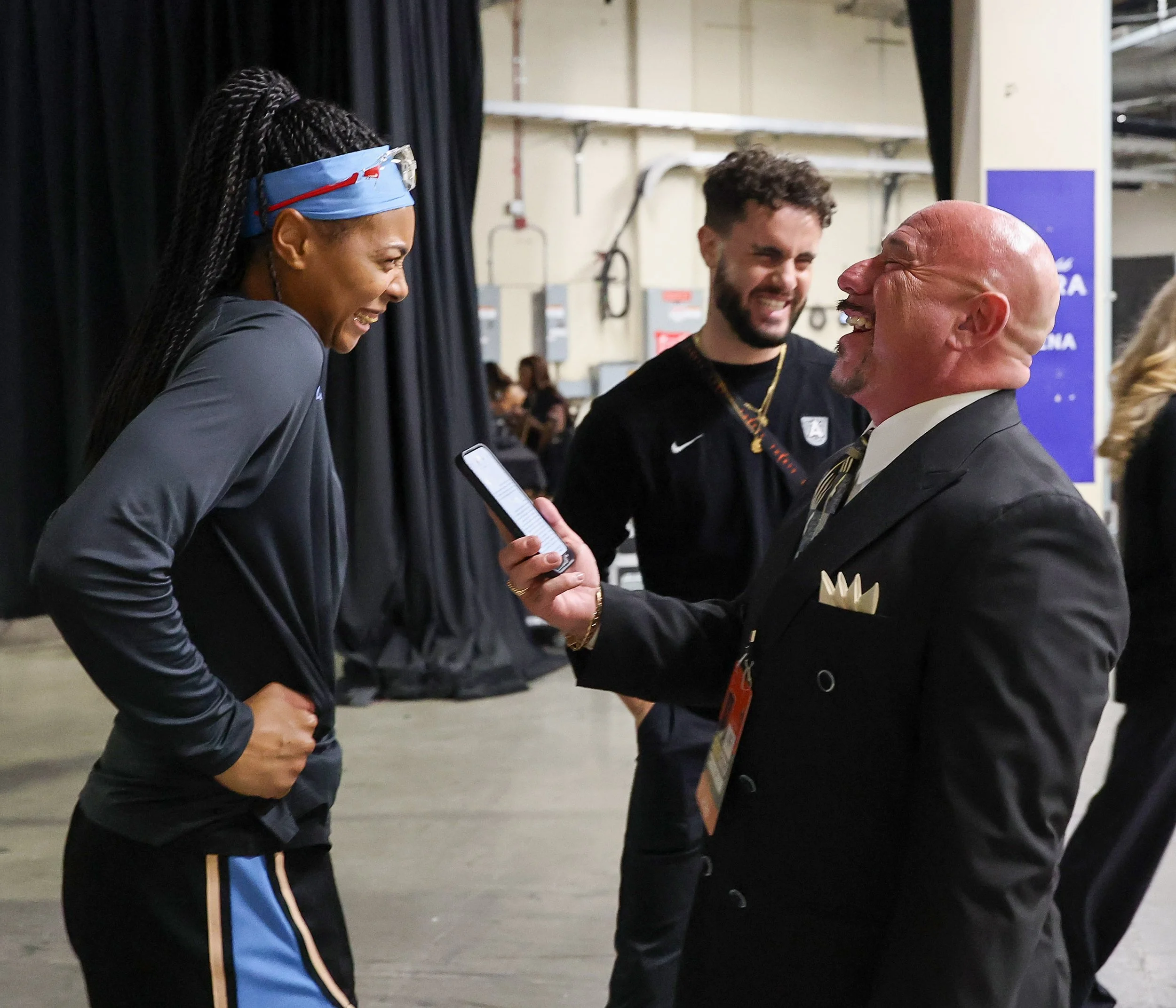
Sharing a laugh with Atlanta Dream star Allisha Gray was a quick reminder I was returning my old self again. PHOTO: Ethan Miller
For a few moments, there was no injury to explain, no rehabilitation to discuss and no reminder of everything I'd endured.
Just basketball, laughter and the familiar feeling of being exactly where I belonged.
It wasn't a declaration that I'd fully recovered.
But damn, it felt good to recognize myself again.
And I’m alive.
That matters more than anything else.
One version of me measured progress by how much weight I could lift. This version learned to celebrate bending a knee.
There was a version who measured professional success by assignments, bylines and income. This version learned that losing a job after 25 years hurts like hell, but you can replace a job.
A life cannot.
One version assumed loyalty came with years of friendship. This version learned it comes with action.
And there was a version who believed experience with depression meant he could always see the next blow coming.
This version knows better.
There may not be a finish line. Some days the victory is therapy, the gym, an encouraging message from the UK or remembering who answered when I reached out.
Some days it’s simpler.
You wake up. You put your feet on the floor. You stand.
You take a step.
Then another.
I’m still here.
I’m still walking.
And I’m not finished.
