
A'ja Wilson isn't just chasing greatness anymore. She's redefining what it means to be the WNBA's GOAT
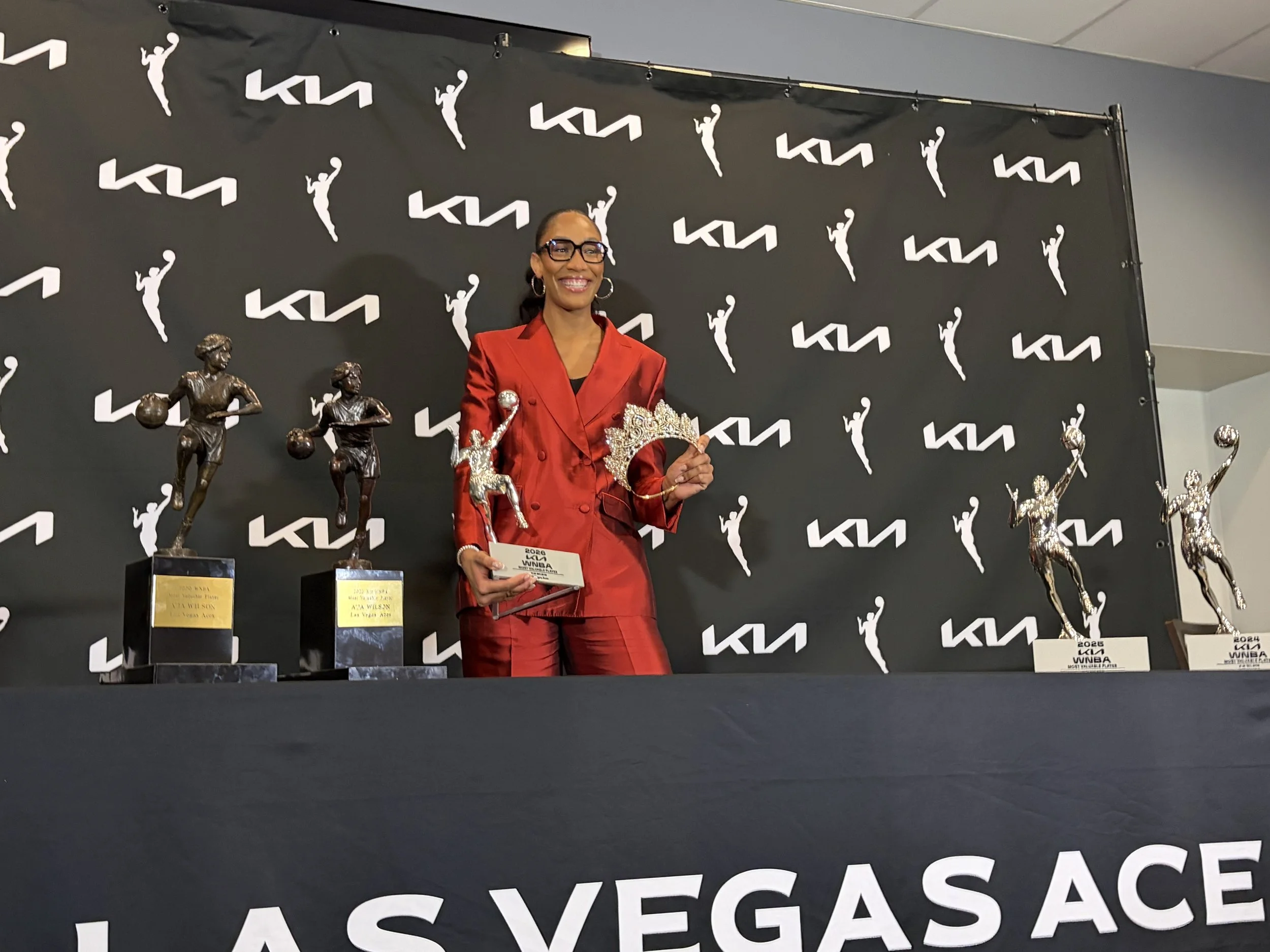
A’ja Wilson earned her third straight MVP trophy and fifth overall after turning in another impressive campaign for the Las Vegas Aces. PHOTO: W.G. Ramirez
By W.G. RAMIREZ
LAS VEGAS — There are moments in sports when statistics become secondary, championships become part of a larger conversation, and greatness demands a different definition.
I've covered enough athletes over the years to recognize those moments. And after listening to A'ja Wilson discuss her unprecedented fifth WNBA Most Valuable Player award Thursday, I'm convinced we're witnessing something far more significant than another trophy presentation.
We're watching a woman reshape what greatness means in professional basketball.
Five MVP awards. Three consecutive. Three WNBA championships. A growing collection of individual accomplishments that already separates her from some of the most decorated players in league history.
But what struck me most wasn't another reminder of her remarkable résumé.
It was what Wilson said about the young girl she once was:
"15-year-old A'ja wasn't sitting up here dreaming about being a five-time MVP. She wasn't dreaming about being a three-time champion. She was dreaming about surviving this world."
That statement, more than anything else Thursday, revealed why Wilson's legacy will ultimately transcend basketball.
Because the greatest athletes don't merely conquer their sports.
They change what people believe is possible.
The numbers are becoming impossible to ignore
Let's address the obvious.
The greatest-of-all-time conversation in women's basketball has never lacked worthy candidates.
Cynthia Cooper established championship excellence during the WNBA's infancy. Sheryl Swoopes helped define its identity. Lisa Leslie elevated its visibility. Diana Taurasi became synonymous with scoring, longevity and competitive ferocity. Maya Moore showed what sustained dominance looks like.
Their contributions deserve recognition, not dismissal.
But Wilson is building a case that is becoming increasingly impossible to argue against.
Her fifth MVP creates unprecedented separation in the league's most prestigious individual category. She has combined offensive brilliance with defensive dominance, collecting scoring titles, Defensive Player of the Year honors and championships while becoming the centerpiece of one of basketball's defining franchises.
Consider her 2024 season, when she became the first WNBA player to score 1,000 points in a single regular season.
Then consider that she followed that historic campaign with another MVP, another championship and another Finals MVP in 2025.
Now comes a fifth MVP in 2026.
This isn't simply longevity producing impressive cumulative numbers.
This is sustained supremacy during an era when the league's talent, athleticism, depth and visibility continue expanding.
And perhaps that's the strongest argument for Wilson's emerging GOAT status.
The competition keeps improving.
Somehow, so does she.
The crown is heavy; Wilson refuses to surrender it
During Thursday's press conference, I asked Wilson whether she had finally allowed herself to appreciate how profoundly she was reshaping women's basketball.
Her response was revealing.
"This crown gets heavy, wearing it gets heavy. It's gonna tilt. It may slip a little bit, but my biggest thing is making sure that it doesn't fall."
Then came four words that perfectly captured her competitive identity: "Not on my watch."
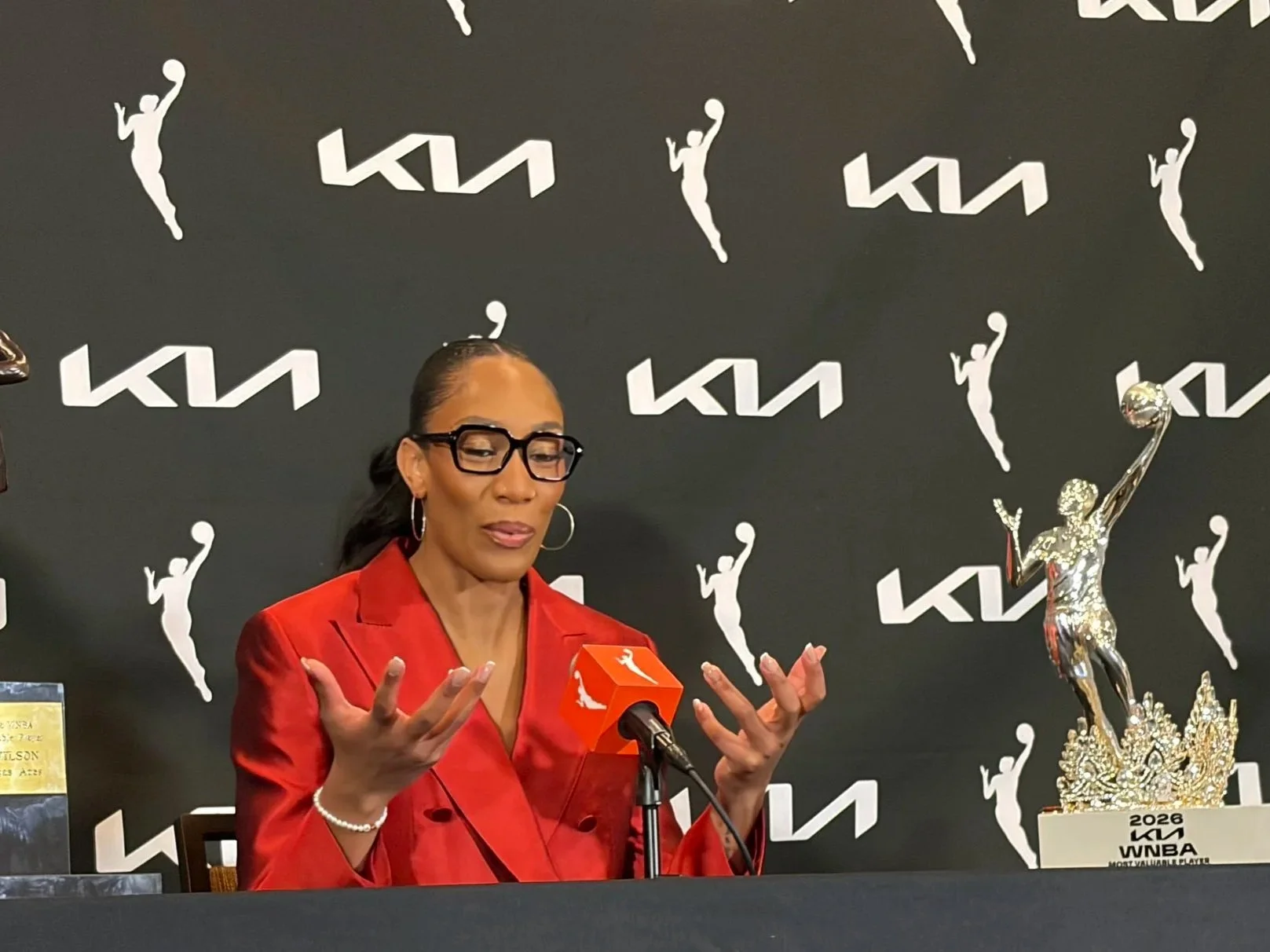
PHOTO: W.G. Ramirez
I found that particularly compelling because Wilson understands something frequently overlooked when discussing superstar athletes.
Greatness carries responsibility.
Every performance becomes a referendum. Every defeat invites criticism. Every accomplishment raises expectations that already seem unreasonable.
Wilson operates within a league experiencing extraordinary growth, where increased attention brings opportunities but also scrutiny, comparison and relentless debate.
Yet she refuses to let outside noise determine her identity.
She credits her family, teammates and the people surrounding her with providing the foundation necessary to remain mentally strong.
And she understands that leadership isn't merely about wearing the crown.
It's about making sure the next generation knows how to carry its weight.
That's how athletes begin transforming into cultural figures.
Not simply through what they accomplish, but through what they represent.
The greatest part of her legacy may still be unwritten
What fascinates me about Wilson is that she remains wonderfully unwilling to declare her work finished.
She openly acknowledged that she isn't satisfied.
She still wants to improve. Still wants championships. Still wants the joy that initially brought her to basketball.
In fact, Thursday's MVP celebration interrupted her scheduled gym time.
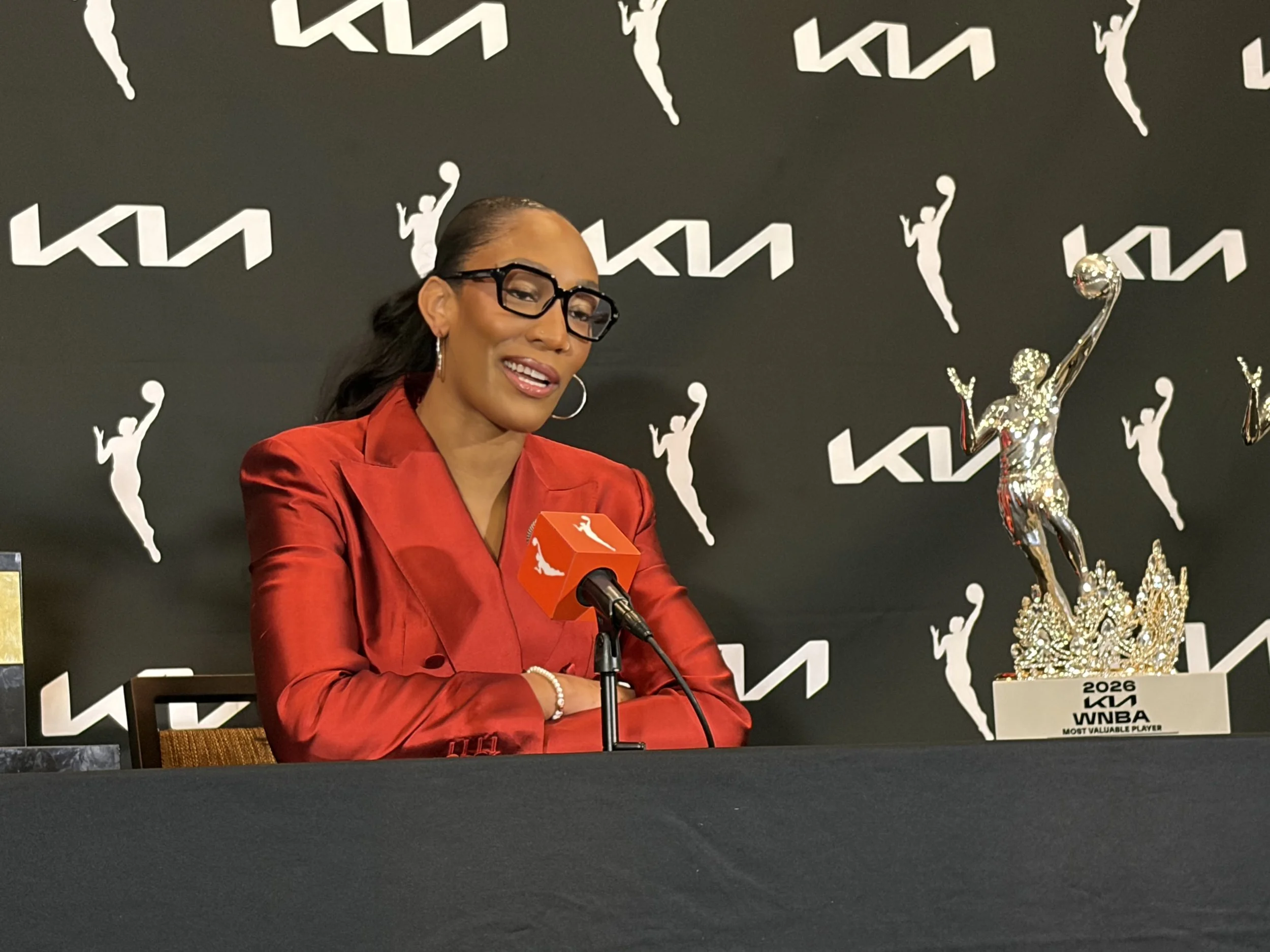
PHOTO: W.G. Ramirez
Think about that.
A player receiving her fifth MVP was concerned about missing an opportunity to work on her game.
That's not manufactured humility.
That's the mentality behind sustained excellence.
But I believe Wilson's greatest contribution extends beyond trophies, records and championship banners.
She has helped redefine what a dominant women's basketball player can look like, how confidently she can embrace her individuality and how unapologetically she can pursue greatness.
She has shown young girls that strength and vulnerability can coexist, that success doesn't require abandoning authenticity, and that being celebrated doesn't mean becoming someone else.
Near the conclusion of Thursday's press conference, Wilson reflected on what her younger self might think of the woman she's become.
She believed that girl would be proud because she accomplished everything on her own terms.
That's the legacy I find most meaningful.
The GOAT debate will continue, as it should. Different generations will defend their icons, and greatness deserves thoughtful comparison.
But from where I sit, Wilson isn't merely entering that conversation anymore.
She's increasingly defining its terms.
And the remarkable part?
At 30 years old, A'ja Wilson might still be writing the most extraordinary chapters of her story.
